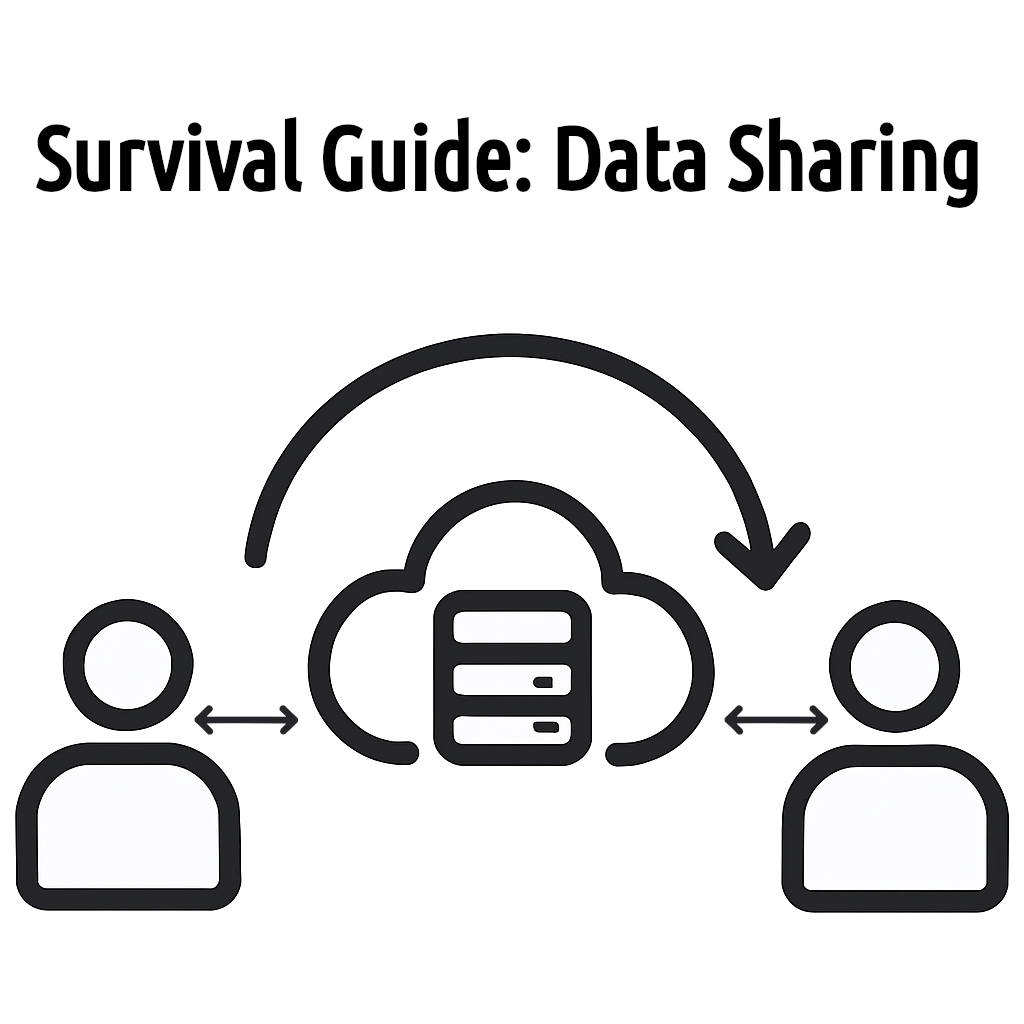
Enabling a consistent and unobstructed standardization of research data will lead to substantial improvements in efficiency and synergies/collaboration among individual researchers and well-designed IT systems. In the era of digital infrastructures, this measure holds paramount importance in shaping the future of research. For the data to be sustainable and reusable, it must adhere to the “FAIR Data Principles”, meaning it should be “Findable, Accessible, Interoperable, and Re-usable”. The FAIR principles will be a cornerstone of the European Open Science Cloud (EOSC) implementation. Nowadays, Data Management Plans (DMPs) have become a requirement for project applications in Horizon Europe and are increasingly being demanded by various funding organizations, including the German Science Foundation (DFG), among others. The scientific consortium NFDI-MatWerk (National Research Data Infrastructure) focuses on the research area Materials Science & Materials Engineering (MSE). The central challenge is the digital representation of materials and their relevant process and load parameters. NFDI-MatWerk will provide in this summer school tailored information and solutions for dealing with research data in MSE.

Who can apply? PhD-students and Post-Docs working in experimental and/or modeling/simulation in any field of materials science and engineering (with or without experience in RDM). Advanced Master Students are also welcome to apply.

Registration deadline: March 15, 2025

Please keep in mind that the number of participants is limited. Therefore, the “First Come-First Served” principle will be applied. Those who register first will have priority to obtain a place in the spring school.

The participation is free of charge. The event will take place in English.

You can find more information abput the event on the official webpage: https://www.eusmat.net/research/other-events/nfdi-matwerk-spring-school-2025/
Related Posts

Carpentries Workshop - Introduction to Python

Carpentries Workshop - Introduction to Python

Empowering Researchers with Foundational Computing Skills: Join the Upcoming Carpentries Workshop

In today’s fast-paced research environment, the ability to harness computational tools effectively can make a world of difference. Whether you’re managing data or automating tasks, having the right skills can significantly streamline your work. That’s where The Carpentries come in — a global initiative comprising the Software Carpentry, Data Carpentry, and Library Carpentry communities. These communities are dedicated to equipping researchers with essential computational and data science skills, helping them to work smarter, not harder.

Read More
How To: Good Scientific Practice

How To: Good Scientific Practice

“Scientific integrity forms the basis for trustworthy research”, so it says in the Guidelines for Safeguarding Good Research Practice of the DFG, the German Research Foundation. As a major funder of research in Germany the DFG, as well as many other funders of research in Germany and the European Union, requires researchers to follow a certain set of rules conducting their research. These rules are called “good scientific practice” and have to be followed by researchers to be viable for funding. According to the guidelines researchers are required to “document all information relevant to the production of a research result as clearly as is required by and is appropriate for the relevant subject area to allow the result to be reviewed and assessed”. But good scientific practice is not done by documenting your research. It also includes i.a. protecting the personality rights of your subjects and handling research data in an appropriate manner by e.g. “back(-ing) up research data and results made publicly available, as well as the central materials on which they are based and the research software used, by adequate means according to the standards of the relevant subject area, and retain them for an appropriate period of time.” This is where Research Data Management (RDM) comes in. Of course RDM is much more than just creating a backup of your data on a USB-Stick and handing it over to anyone asking for it. “Good scientific practice” in RDM follows the FAIR principles:

Read More
Comments on Collaboration - My Experience with the DKZ.2R Rent-an-Expert Program

Comments on Collaboration - My Experience with the DKZ.2R Rent-an-Expert Program

Comments on Collaboration - My Experience with the DKZ.2R Rent-an-Expert Program

At the beginning of this year (2025), I received an email regarding the DKZ.2R “Rent an expert” program. I was very interested in this initiative and therefore applied for support from the scientific consulting team at the Rhine-Ruhr Center for Scientific Data Literacy (DKZ.2R) for assistance with my data analysis.

I obtained my master’s degree in Plant Nutrition from the China Agricultural University and pursued my PhD study at the University of Hohenheim. I am currently a postdoctoral researcher in the Institute of Crop Science and Resource Conservation, Crop Functional Genomics, at the University of Bonn.
My research expertise includes plant culturing, molecule cloning, biochemical analysis and limited data analysis experience on large-scale NGS datasets.
Since the beginning of April 2025, two DKZ.2R consultants were assigned to me: Tarek Iraki, who is proficient in programming languages such as Python, and Lennard Maßmann, who specializes in working with R. Together, we collaboratively worked on my Postdoctoral project, which focuses on the molecular and genomic dissection of lateral root development in maize.

Read More