How To: Good Scientific Practice
- C. Hillen
- Data , RDM , good scientific practice
- August 28, 2024

Christian Hillen
I have a background in history. As an archivist I have been working with historical (research) data - both analogue and digital - for the last 25 years. Currently I am a consultant with DKZ.2R at the RRZK (Regionales Rechenzentrum der Universität zu Köln).
“Scientific integrity forms the basis for trustworthy research”, so it says in the Guidelines for Safeguarding Good Research Practice of the DFG, the German Research Foundation. As a major funder of research in Germany the DFG, as well as many other funders of research in Germany and the European Union, requires researchers to follow a certain set of rules conducting their research. These rules are called “good scientific practice” and have to be followed by researchers to be viable for funding. According to the guidelines researchers are required to “document all information relevant to the production of a research result as clearly as is required by and is appropriate for the relevant subject area to allow the result to be reviewed and assessed”. But good scientific practice is not done by documenting your research. It also includes i.a. protecting the personality rights of your subjects and handling research data in an appropriate manner by e.g. “back(-ing) up research data and results made publicly available, as well as the central materials on which they are based and the research software used, by adequate means according to the standards of the relevant subject area, and retain them for an appropriate period of time.” This is where Research Data Management (RDM) comes in. Of course RDM is much more than just creating a backup of your data on a USB-Stick and handing it over to anyone asking for it. “Good scientific practice” in RDM follows the FAIR principles:
Data have to be:
- Findable
- Accessible
- Interoperable
- Reusable
To make sure your data are FAIR you will have to put certain policies and procedures in place. For example by creating and following a “Data Management Plan”. In our Blog post about creating a good data management plan you can read how to save time and effort in the long run!
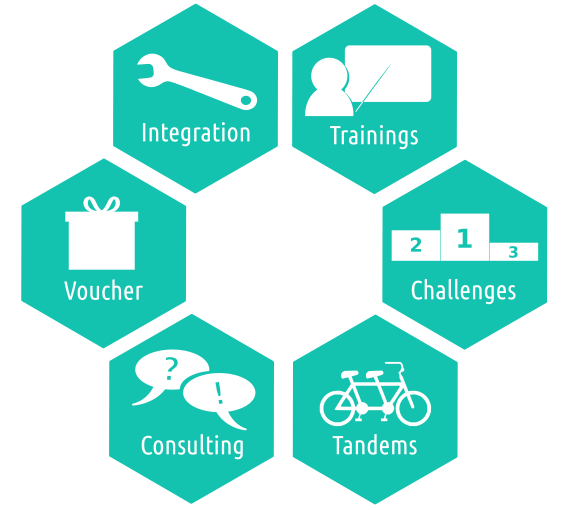
To make data findable one has to provide metadata. Metadata is the data describing your actual research data e.g. data format, storage size, creation date and so on, a unique and persistent identifier is to be assigned to the data to make it findable. In order to be accessible this (meta)data has to be retrievable. Using controlled vocabularies for metadata allows them to be interoperable. If data and metadata are richly described, released with a clear and accessible usage license, and given a detailed provenance they can be reused efficiently. If you need guidance in how to handle your research data or in creating a data management plan for your own data contact us at info@dkz.2r.de and take part in our “Rent-an-Expert“ project (free of charge!). For answers to frequently asked questions about what Research Data Management is and pointers to useful resources visit FDMScouts.nrw FAQ. You can also follow these links for detailed information on good scientific practice and how to actually follow and implement the FAIR principles in your research.